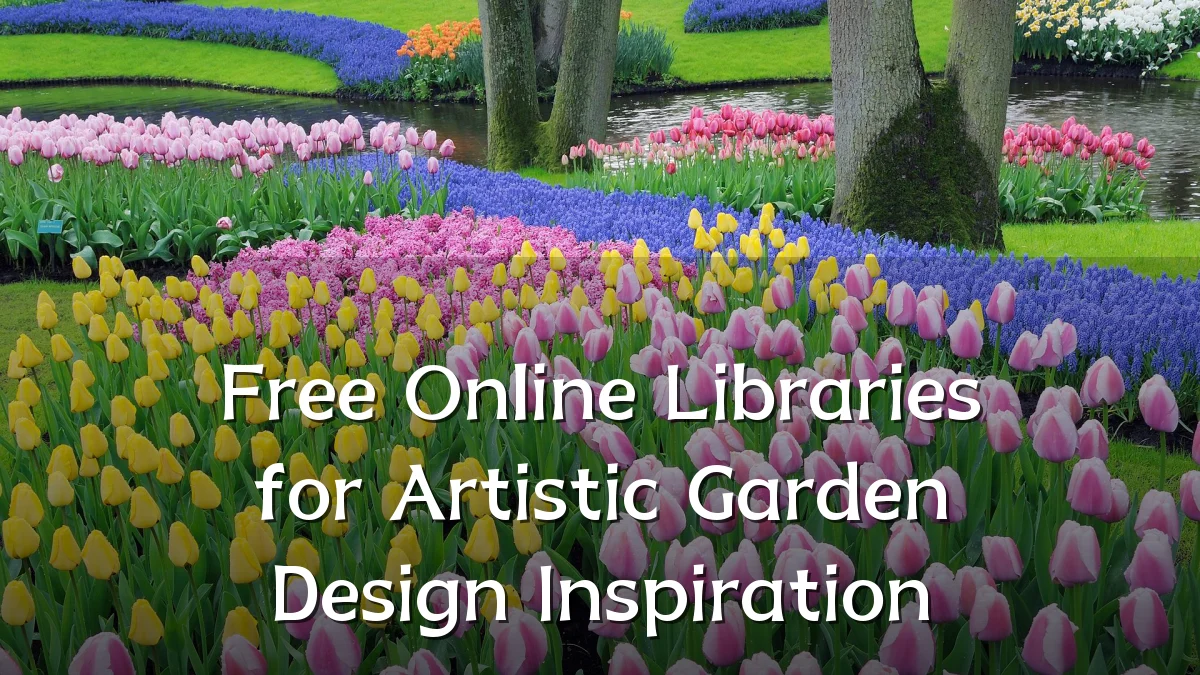
Free Online Libraries for Artistic Garden Design Inspiration
Recent Trends in Digital Garden Design Resources
Over the past few years, a growing number of digital archives, institutional collections, and community-driven platforms have made high-quality garden imagery and plan documents freely accessible online. These resources now form an alternative to costly design books or subscription-based inspiration boards.

- Public domain image repositories (e.g., museum and university digital collections) have released thousands of historic garden plans, botanical illustrations, and landscape photographs.
- User-contributed platforms allow gardeners to upload photos of their own artistic arrangements, creating a living library of contemporary designs.
- Search filters now support queries by plant type, layout style, color palette, and hardscape material, narrowing what was once a cumbersome exploration process.
- Mobile-friendly interfaces and downloadable high-resolution files enable designers to reference images on-site during planning or installation.
Background: How Artistic Garden References Evolved
Before widespread internet access, garden inspiration was largely gathered from printed books, travel photos, and visits to public gardens. Libraries and horticultural societies maintained physical collections that were often regional or limited in scope. The digitization wave that began in the early 2000s gradually brought these resources online, but access was often restricted to members or required institutional login. Only in the last several years have a few major libraries—such as the Biodiversity Heritage Library and certain national archive projects—committed to fully open-access policies for their garden-related holdings. Community platforms have since filled gaps by allowing amateur and professional gardeners to share original work under Creative Commons licensing, broadening the definition of “artistic garden design” beyond classical formalism.
User Concerns When Choosing a Free Library
Not every free online library meets the needs of someone seeking artistic garden design inspiration. Users typically evaluate these options:
- Image quality and resolution: Low-resolution or watermarked images limit their usefulness for close study or publication ideas.
- Metadata and searchability: Poorly tagged collections can be time‑consuming to browse; the best libraries allow filtering by era, region, style, or plant genus.
- Licensing clarity: Public domain or Creative Commons Zero (CC0) assets are safe to reuse; other licenses may restrict commercial adaption or require attribution.
- Curatorial focus: Some libraries emphasize historic European gardens, while others feature contemporary sustainable or small-space designs. Aligning the collection’s focus with one’s project is essential.
- Platform stability: Free sites may change terms, go offline, or lose funding; users should download key references when permitted.
Likely Impact on Hobbyists and Professionals
The availability of free artistic garden libraries is lowering the barrier for entry-level designers and DIY gardeners who previously relied on costly magazines or limited local examples. Professionals gain a widened palette of historical and international styles without subscription fees. The trade‑off is that the sheer volume of material can lead to analysis paralysis, and the lack of professional curation means users must develop their own critical eye for composition, scale, and feasibility. Collaborative tagging and user ratings in some platforms partially offset this, but the work of translating a two‑dimensional image into a three‑dimensional garden still rests on the user.
What to Watch Next
Expect further integration between free libraries and digital design tools. For example, a few platforms now allow users to overlay plant spacing guides or sun‑path diagrams onto an inspiration photo. AI‑powered visual search is also emerging: uploading a picture of a garden element could retrieve similar patterns within a library. Additionally, more museums and botanical gardens are likely to join open‑access consortia, adding niche collections such as Asian garden art or edible ornamental designs. Users should monitor how these libraries handle attribution and rights as they expand—especially when third parties reuse images for commercial products.